
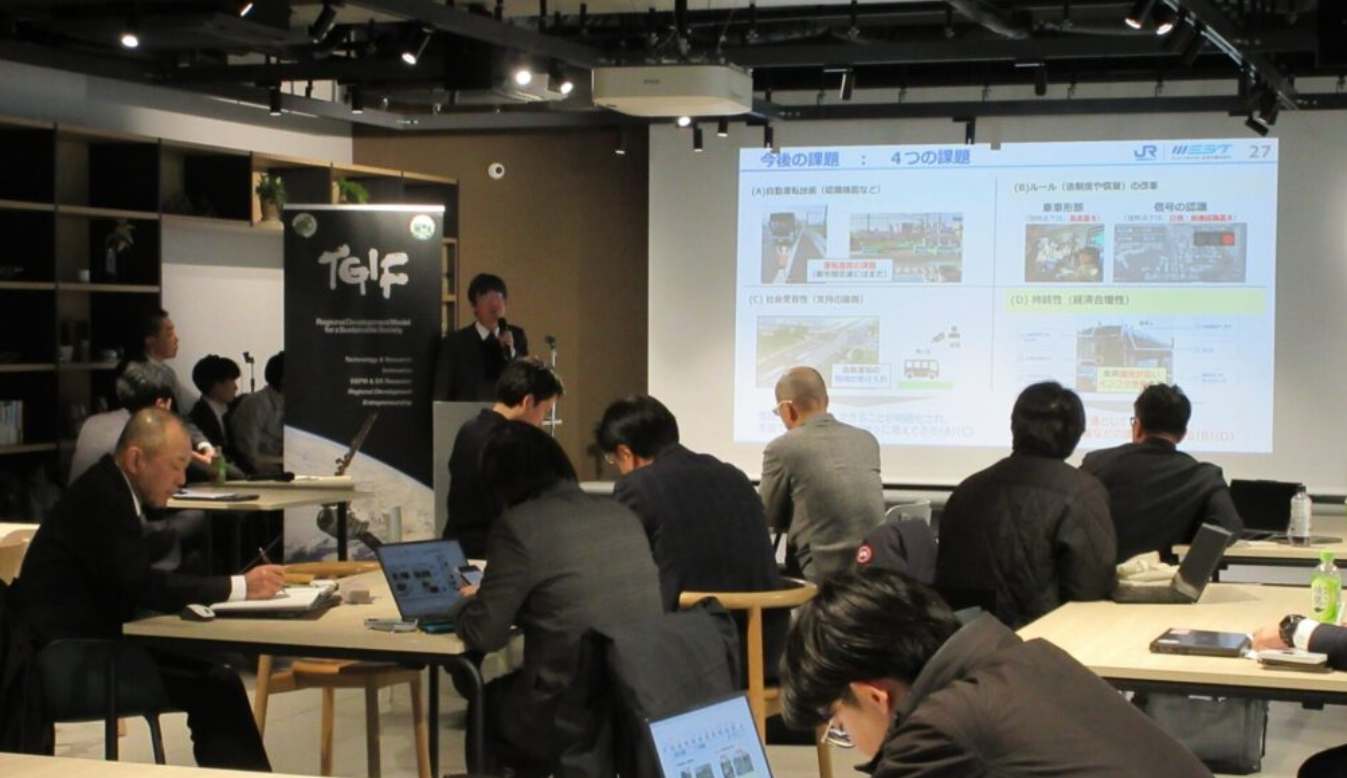
On February 2, 2026, we held the 15th TGIF Seminar, titled ‘The Mobility Revolution Transforming Local Communities: Implementation and Collaboration Starting from Higashihiroshima.
In this seminar, discussions centered on the autonomous BRT (Bus Rapid Transit) project currently underway in Higashihiroshima. Representatives from local government, railway operators, automobile manufacturers, bus operators, and research institutions gathered to examine next‑generation transportation systems from multiple perspectives.
Watch the seminar here (some parts are unavailable due to circumstances):
Below is a digest of the presentations delivered on the day of the seminar.
1. Higashihiroshima’s Challenge: Shaping the Future of Mobility Through Data and Collaboration
In the first half of the seminar, Hiroshima University and the City of Higashihiroshima shared the current situation of the region and their future vision. Following the opening remarks by Professor Kaneko of Hiroshima University, which addressed the challenges facing the region as well as the concepts of smart mobility and co‑creation in Higashihiroshima, Mr. Aragane from the city presented its transportation policies, and Professor Chikaraishi delivered a research lecture.
Higashihiroshima is a vibrant city with a steadily growing population; however, approximately 70 percent of trips rely on private automobiles, and improving citizen satisfaction with public transportation has long been a challenge. The city has announced its ‘Next‑Generation University Town Initiative,’ which includes a plan to obtain Level 4 autonomous driving approval by 2027 for the boulevard connecting Saijō Station and Hiroshima University. In connection with this, Professor Chikaraishi emphasized the importance of data‑driven discussions.
2. Technology in Practice: JR West’s Autonomous and Platooning BRT
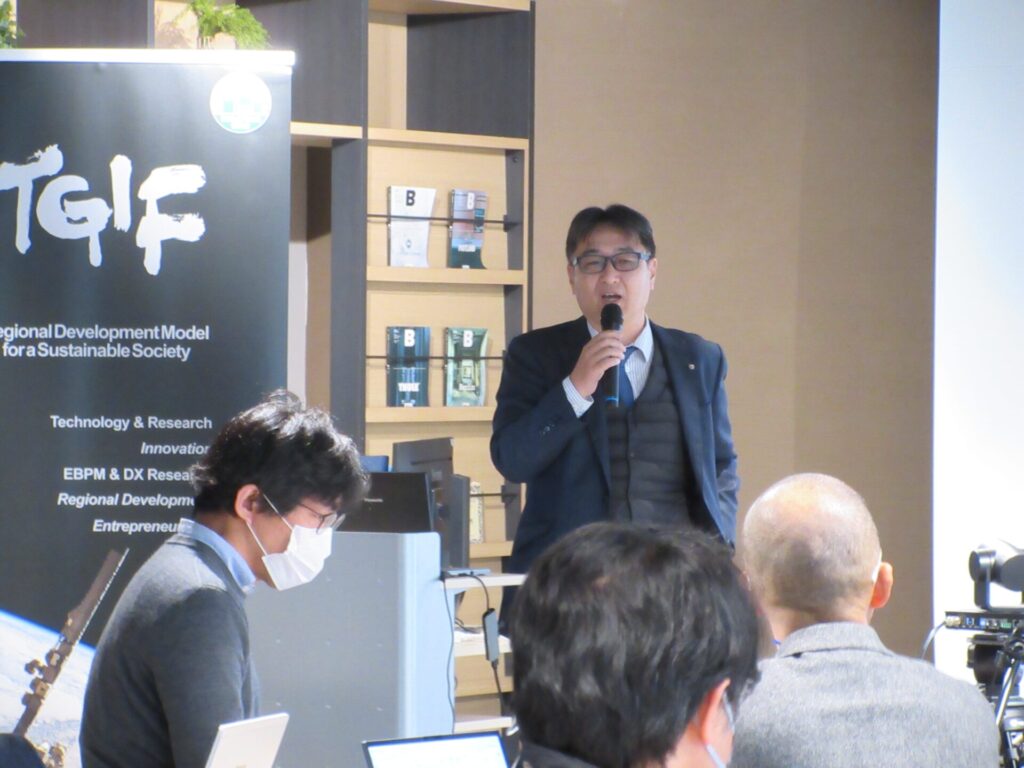
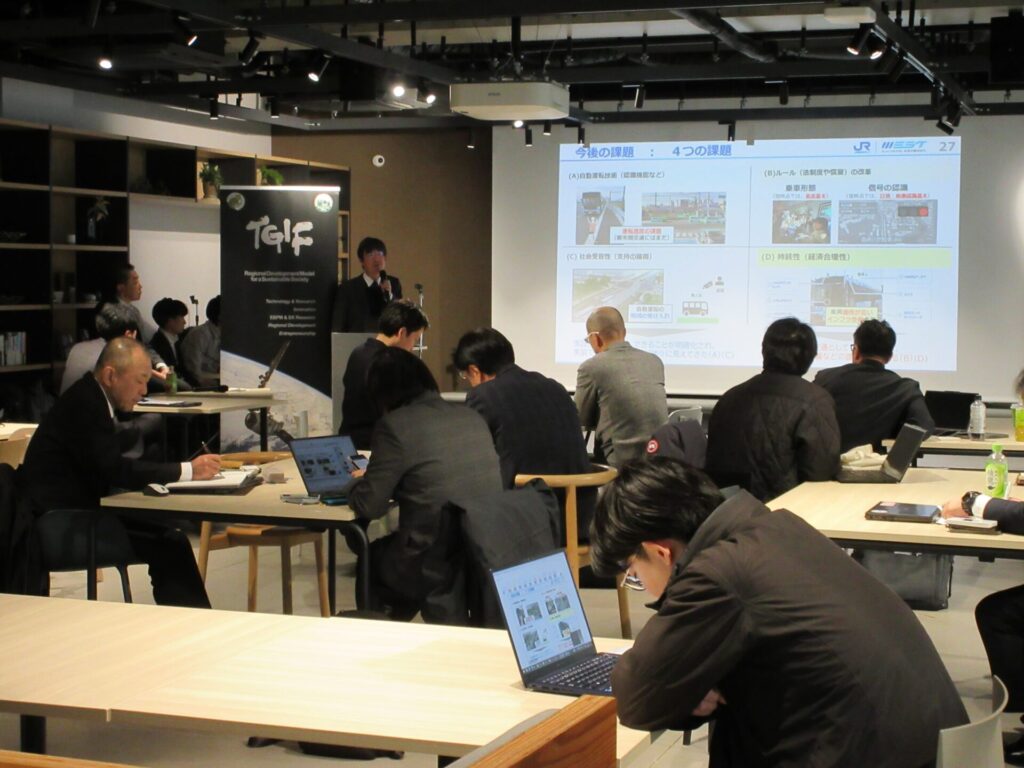
Mr. Tabata from JR West reported on the development status of the BRT (Bus Rapid Transit) system that the company aims to implement in Higashihiroshima. The system employs a ‘platooning’ technology in which a driver operates the lead vehicle while unmanned following vehicles automatically track its movement, offering a potential solution to driver shortages. At the same time, he candidly noted that vehicle costs and social acceptance—particularly gaining public understanding—remain major challenges for practical implementation.
3. Legal Barriers to Autonomous Driving: AIST’s Initiatives
Mr. Tanaka and Mr. Hashimoto from the National Institute of Advanced Industrial Science and Technology (AIST) outlined the key challenges involved in embedding new technologies into society. They emphasized that achieving autonomous driving requires not only technological advancement but also the development of viable business models and appropriate legal frameworks. In particular, they noted that ensuring in‑vehicle safety in the absence of a driver and clarifying legal responsibility are critical issues, and that AIST is working with the Ministry of Justice and the National Police Agency to develop relevant guidelines.
4. A Manufacturer’s Perspective: Suzuki’s Approach to Everyday Mobility
Mr. Fujitani from Suzuki Motor Corporation presented the company’s unique approach as an automobile manufacturer. Distinct from the Western trend of pursuing high‑performance, high‑cost autonomous vehicles, Suzuki places emphasis on mobility as everyday infrastructure, guided by its philosophy of ‘small, fewer, light, short, and beautiful.’ He introduced several initiatives tailored to local realities, including the application of autonomous driving technologies within factory operations and a biogas project in India that utilizes cattle manure.
5. Real‑World Insights from a Leading Case: The Hitachi BRT Operated by Ibaraki Kotsu
Finally, Mr. Masuda from Ibaraki Kotsu presented a case report on the Hitachi BRT, one of the few systems in Japan operating Level 4 autonomous driving under a commercial (green‑plate) license. He shared several on‑the‑ground challenges, including situations in which autonomous driving must be suspended due to rain or low visibility, as well as the issue of reduced operating speeds—often below 40 km/h—because the system is calibrated with a strong emphasis on safety.
Conclusion
This seminar highlighted the importance of a multifaceted approach to social implementation—one that goes beyond technical experimentation to include legal frameworks, business models, and the realities of everyday life. The discussions underscored the value of collaboration among industry, government, and academia, and heightened expectations for the future development of the ‘Higashihiroshima Model,’ which seeks to address regional mobility challenges through such partnerships.
About TGIF Seminar
The TGIF seminar drives to engage with all participants to understand the challenges and identify new research and business opportunities through collaborations. The outcomes could lead to further research funding or new business opportunities and strengthening cross-sector networks. By working with multidisciplinary academics and industry partners, we aim to contribute to regional and national development as a successful example in Japan, specifically in the area of ‘carbon neutral, smart city and campus SDGs.